




Why Square Sails Still Make Sense
Maritime History | October 1, 2026
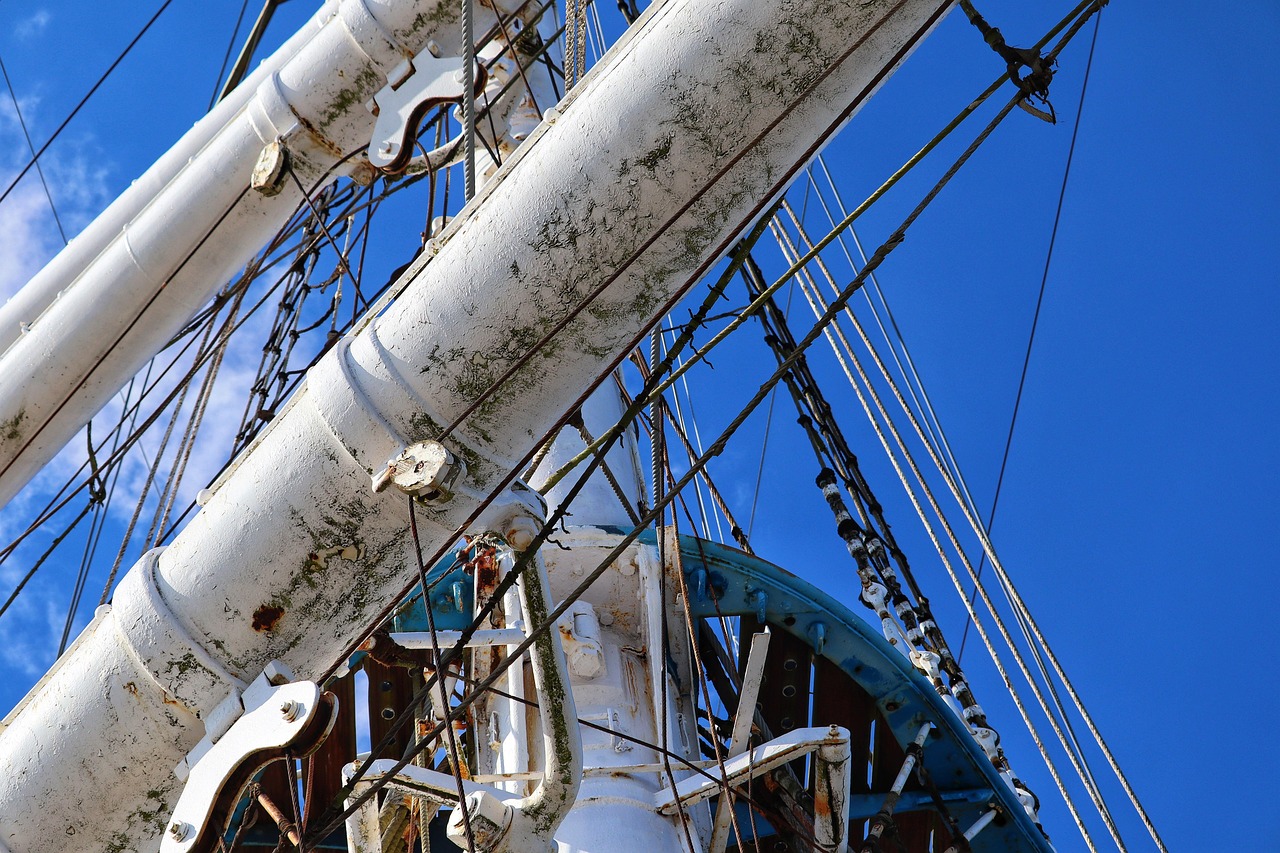
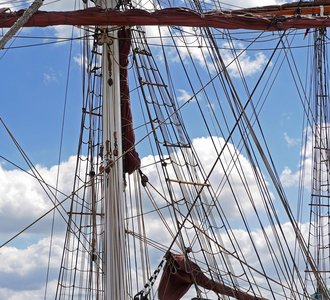
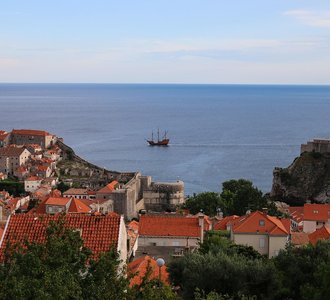
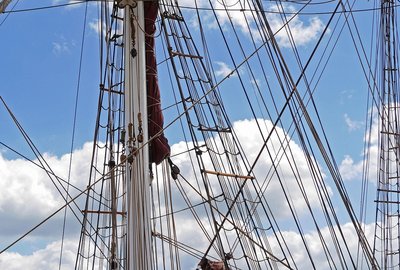
The first time you see a square-rigged ship under full sail, the impression is not of efficiency. It is of spectacle. Four masts of billowing canvas, yards stacked like the rungs of a ladder, ropes running in every direction. It looks like a machine built by people who had never heard of streamlining. And yet for roughly four hundred years, this was the fastest and most reliable way to move cargo and people across the world's oceans, and the reasons why are worth understanding.
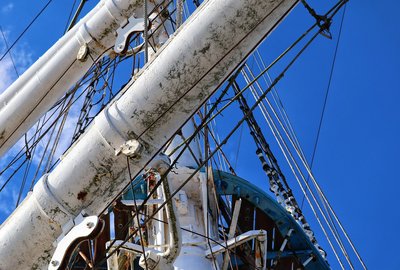
Square sails are not actually square. Most are rectangles or trapezoids, and they hang from horizontal yards that can be angled to catch the wind. The genius of the rig is that it lets a ship run before the wind with enormous power while still being able to sail at an angle to it. A square-rigger cannot point as close to the wind as a modern sloop, but on a long ocean passage with steady trade winds, that hardly matters. What matters is total sail area and the ability to keep the ship balanced across many sails at once.
The Physics of a Floating Argument
Every sail on a square-rigger pulls on a different part of the ship, and the crew's job is to make all those pulls agree. If the courses are drawing hard and the topsails are luffing, the ship will fight her helm. If the mizzen is over-trimmed, she will want to round up into the wind. Trimming a square-rigger is not a matter of setting a sail and forgetting it. It is a continuous negotiation, and the vocabulary that grew up around it, from brace to bowline, reflects how finely that negotiation had to be tuned.
Splitting the sail plan across many smaller sails also made the rig safer. A single huge sail is a single huge failure point. A square-rigger can lose a topsail in a squall, reef it, and keep sailing on the remaining canvas. That redundancy is why these ships survived storms that would have dismasted smaller rigs, and why captains trusted them with cargoes worth more than most crews would earn in a lifetime.
What We Lose When We Forget
Modern sailing has largely abandoned square rig for good reasons. It requires large crews, it is slow to tack, and it demands a level of coordinated physical labor that few people today have any reason to learn. But there is something worth preserving in the knowledge itself. The old rigs encode centuries of hard-won understanding about wind, weight, and the sea. When you watch a crew brace the yards in unison and feel the ship surge forward, you are watching a technology that was refined by people who had no second chances.
I have sailed on modern yachts and I have sailed on square-riggers, and I would not trade either experience. But when someone asks why we bother keeping these old ships alive, the honest answer is that they still work. They work differently, and they work beautifully, and every time the yards come around and the canvas fills, you understand a little better why our ancestors crossed oceans in them for four hundred years.


Tall Ship Thoughts

On a tall ship, the cook feeds more than bodies; they feed morale, routine, and the small comforts that make a floating community work.